
LRYIKAS PARTS KNOWLEDGE DESK
06-inner-vs-outer-cv-joint
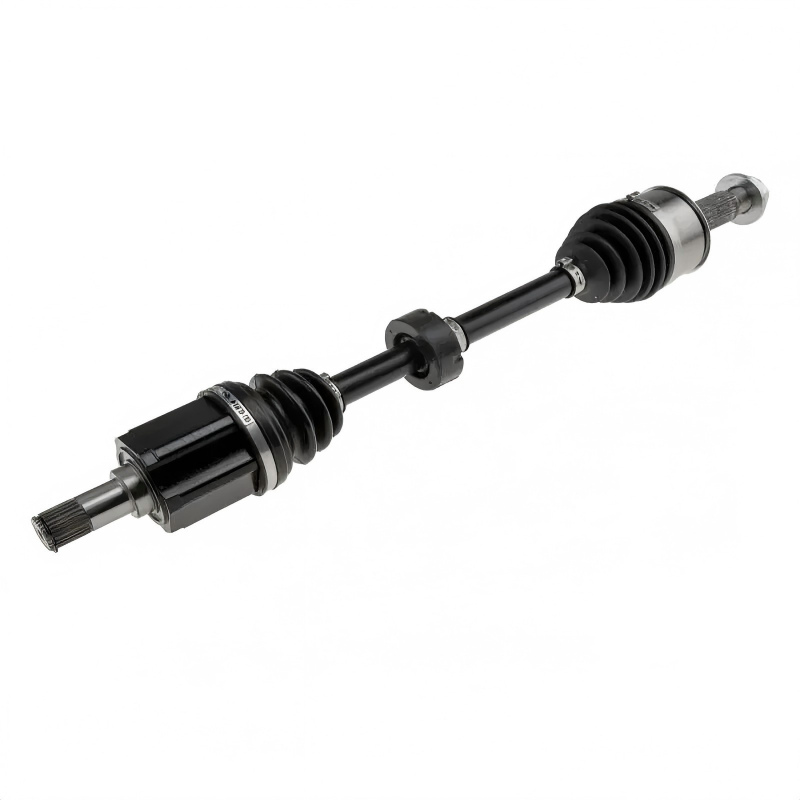
Quick answer: The outer CV joint usually wears out first, because it works at larger angles and sits closer to road dirt and water. Worn outer joints typically click in turns, while worn inner joints more often cause vibration under acceleration or a clunk when changing between drive and reverse. This guide compares the two joints, explains how each one fails, and shows how to diagnose the right one before ordering parts.
Where Are the Inner and Outer CV Joints?
Each CV axle has two joints, connected by a shaft:
- The inner joint is at the transmission or differential end.
- The outer joint is at the wheel end, connected to the wheel hub.
Both are covered by a protective boot filled with grease. If you want to see how these parts fit within the whole assembly, read CV axle vs CV joint.
Outer CV Joint
The outer CV joint is a fixed joint. It is designed to work at large steering angles, in some vehicles around 45 degrees or more, so the wheel can turn left and right while receiving smooth power. It does not slide in and out.
Why It Usually Wears First
- It operates at the largest angles, which puts high load on the balls and tracks.
- It sits close to the wheel, so it is more exposed to water, dirt, salt, and road debris.
- The boot folds and stretches with every steering movement, so it is more likely to crack and split.
Symptoms of a Worn Outer CV Joint
- Clicking or popping when turning, loudest in tight turns
- Click rate increases with speed
- Grease around the wheel or on the inside of the rim
- Noise is worse under acceleration and often stronger on one side
For a detailed diagnostic guide, see clicking noise when turning.
Inner CV Joint
The inner CV joint is a plunging joint. In addition to allowing angle changes, it slides in and out to absorb suspension movement and changes in the distance between the transmission and the wheel. Common types include tripod joints and cross-groove joints.
Why It Fails
- Boot damage and grease loss: as with the outer joint, contamination is a major cause.
- Heat: the inner joint is close to the engine, exhaust, and transmission, so heat can age the boot and grease.
- High mileage: repeated sliding movement wears the tripod or tracks over time.
- Worn engine or transmission mounts: extra movement increases joint angles and wear.
- Modified suspension: lowered or lifted vehicles place the joint at steeper angles.
Symptoms of a Worn Inner CV Joint
- Vibration or shudder when accelerating
- Knocking or clunking when shifting between drive and reverse
- Noise or vibration that fades when coasting
- Grease near the transmission side or on the underbody
Inner vs Outer CV Joint Comparison
| Outer CV Joint | Inner CV Joint | |
|---|---|---|
| Location | Wheel side | Transmission side |
| Joint type | Fixed | Plunging |
| Main function | Handles large steering angles | Handles suspension travel and axle length change |
| Typical symptom | Clicking or popping in turns | Vibration under acceleration, clunk on shifting |
| Wear rate | Usually wears first | Often lasts longer |
| Main wear factors | Steering angle, dirt, water, boot damage | Heat, mileage, suspension angles |
| Visible check | Boot behind the wheel | Boot near the transmission |
How to Tell Which Joint Is Bad
- Listen while turning. Clicking in full-lock turns usually points to the outer joint.
- Feel under acceleration. Vibration in a straight line that appears when you press the accelerator suggests the inner joint.
- Inspect both boots. Look for cracks, splits, loose clamps, and grease spray on each end of the axle.
- Check by hand on a lift. Move each joint through its range. A good joint feels smooth, while a worn one feels rough, loose, or notchy.
- Rule out other parts. Wheel bearings, tires, and mounts can cause similar symptoms.
Does One Joint Mean Replacing the Whole Axle?
Often, yes. Most workshops choose a complete axle even if only one joint is worn, because:
- It is faster to install than replacing a single joint.
- The other joint and shaft have the same mileage and are likely near the end of their life.
- A new axle is pre-assembled and pre-greased.
If only the boot is damaged and the joint is still smooth, a CV boot repair kit can be enough. For a full list of warning signs, read bad CV axle symptoms.
Which Part Should You Order?
| Situation | Best Option |
|---|---|
| Outer joint clicking, boot split | Complete CV axle |
| Inner joint vibration under acceleration | Complete CV axle, after ruling out tires and mounts |
| Torn boot, joint smooth | Boot kit, replaced as early as possible |
| Specialist rebuild with good shaft | Individual CV joint |
Before ordering, confirm vehicle details, position (left or right), spline count, and ABS ring requirement. These details matter even more than the joint type.
Tips for Workshops and Distributors
- Stock the outer-joint-driven repairs. Complete axles for popular models are the most requested items.
- Offer boot kits as a second option. They give customers a lower-cost choice for early damage.
- Train staff to ask the right questions. "Where do you hear the noise?" and "When does it happen?" quickly narrow down the joint.
- Verify OE numbers. This avoids returns caused by wrong spline counts or lengths.
Wondering how long a good axle should last? See how long CV axles last.
One Source for Joints, Boot Kits, and Complete Axles
Lryikas Auto supplies CV joints, boot kits, and complete axles built to OE specifications. With over 30,000 stocked SKUs and flexible MOQ, importers and repair chains can mix several categories in a single shipment. Our CV axle series carries a 12–24 month warranty, and private label branding is available.
Send us your list and we'll match the OE numbers for you. Contact us today.
Frequently Asked Questions
Which CV joint fails first, inner or outer?
The outer CV joint usually fails first, because it works at larger angles and is more exposed to dirt and water.
What does a bad inner CV joint feel like?
Usually vibration or shudder under acceleration, and sometimes a clunk when shifting between drive and reverse.
What does a bad outer CV joint sound like?
A rhythmic clicking or popping noise when turning, which gets louder in tight turns and faster with vehicle speed.
Can I replace only the inner or outer joint?
Yes, but most workshops replace the complete axle because it is faster and the other joint is usually close to its wear limit.
Do inner and outer CV joints look different?
Yes. The outer joint is usually a compact, rounded housing with a splined stub, while the inner joint is usually larger and designed to slide along the shaft.
Are inner and outer CV joints interchangeable?
No. They are built for different movements and cannot be swapped.
{ "@context": "https://schema.org", "@type": "FAQPage", "mainEntity": [ {"@type": "Question", "name": "Which CV joint fails first, inner or outer?", "acceptedAnswer": {"@type": "Answer", "text": "The outer CV joint usually fails first, because it works at larger angles and is more exposed to dirt and water."}}, {"@type": "Question", "name": "What does a bad inner CV joint feel like?", "acceptedAnswer": {"@type": "Answer", "text": "Usually vibration or shudder under acceleration, and sometimes a clunk when shifting between drive and reverse."}}, {"@type": "Question", "name": "What does a bad outer CV joint sound like?", "acceptedAnswer": {"@type": "Answer", "text": "A rhythmic clicking or popping noise when turning, which gets louder in tight turns and faster with vehicle speed."}}, {"@type": "Question", "name": "Can I replace only the inner or outer joint?", "acceptedAnswer": {"@type": "Answer", "text": "Yes, but most workshops replace the complete axle because it is faster and the other joint is usually close to its wear limit."}}, {"@type": "Question", "name": "Do inner and outer CV joints look different?", "acceptedAnswer": {"@type": "Answer", "text": "Yes. The outer joint is usually a compact, rounded housing with a splined stub, while the inner joint is usually larger and designed to slide along the shaft."}}, {"@type": "Question", "name": "Are inner and outer CV joints interchangeable?", "acceptedAnswer": {"@type": "Answer", "text": "No. They are built for different movements and cannot be swapped."}} ] }