
LRYIKAS PARTS KNOWLEDGE DESK
01-bad-cv-axle-symptoms
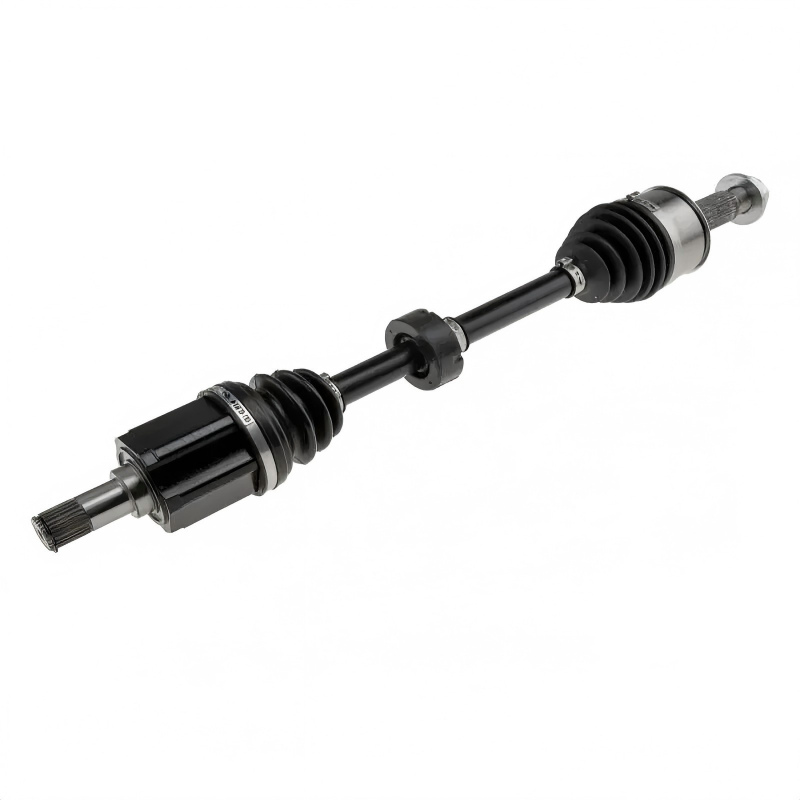
Summary: A failing CV axle rarely breaks without warning. In most cases it gives clear signs first, such as clicking in turns, vibration under acceleration, or grease thrown around the wheel well. This guide explains the 7 most common bad CV axle symptoms, what causes each one, how to inspect the axle yourself, and how to decide between a boot repair and a full replacement. It also includes practical advice for repair shops and distributors who want fewer comebacks.
What Does a CV Axle Do?
A CV axle (constant velocity axle, also called a half shaft or drive axle) transfers torque from the transmission or differential to the wheel. It is a key part of almost every front-wheel-drive and all-wheel-drive vehicle, and it is also used on many rear-wheel-drive cars with independent rear suspension.
The axle has a steel shaft with a constant velocity joint at each end. These joints let the wheel receive smooth, steady power even while it is steering left or right and the suspension is moving up and down. Each joint is packed with special grease and sealed by a rubber or thermoplastic CV boot, held in place by metal clamps.
Because the joints work at changing angles under heavy load, and because the only thing protecting them is a thin boot, the CV axle is a normal wear item. Knowing the warning signs early lets you replace it before it fails on the road. If you want to understand the parts in more detail, read our guide on CV axle vs CV joint.
7 Bad CV Axle Symptoms
1. Clicking or Popping Noise When Turning
This is the most recognizable symptom. When the steering wheel is turned and the vehicle accelerates, a worn outer CV joint produces a rhythmic click or pop. The noise speeds up as the wheel speeds up, and it is loudest in tight turns such as parking lots, U-turns, and roundabouts.
Why it happens: inside the joint, steel balls roll in precision tracks. When grease is lost or the tracks are worn, the balls no longer roll smoothly and they knock in the joint cage.
What to do: replace the axle. A new boot alone will not stop the noise once the joint is already clicking. For a full breakdown, see clicking noise when turning.
2. Vibration While Accelerating
A shudder or vibration that appears when you press the accelerator and fades when you coast often points to a worn inner CV joint, or sometimes a bent axle shaft. It may be felt through the floor, the seat, or the steering wheel, and it is often worse at medium speeds under load.
Why it happens: the inner joint plunges in and out as the suspension moves. When it is worn, the extra play creates an imbalance that shows up as vibration when torque is applied.
What to do: inspect both inner joints and the shaft. Vibration can also come from unbalanced tires or worn engine mounts, so rule those out as well.
3. Grease on the Inside of the Wheel or Under the Car
Dark, thick grease sprayed on the inner side of the wheel, on suspension parts, or on the ground under the car means a CV boot has split or a clamp has come loose. The grease is thrown outward by the spinning axle, so it often leaves a clear spray pattern.
Why it matters: grease is what protects the joint. Once it escapes, dirt and water enter and the joint wears out far faster than normal.
What to do: act quickly. If the joint is still smooth, a boot replacement may be possible. If you can already hear noise, plan for a full axle replacement.
4. Torn, Cracked, or Loose CV Boot
You do not have to wait for noise. A visual check behind the wheel can show cracks, splits, perished rubber, or a clamp that has slipped. Boots usually fail from age, heat, road debris, or tight steering angles that fold the rubber repeatedly.
If the damage is caught early and the joint is still quiet and smooth, a CV joint repair kit (boot, clamps, grease, and snap ring) can save the axle. If the joint already feels rough, notchy, or loose, replacing the complete axle is more reliable and often faster for the workshop.
5. Knocking or Clunking When Shifting or Changing Direction
A clunk when you move from drive to reverse, or when you quickly get on and off the throttle, can mean excessive play in the CV joints or splines. This symptom is often linked to a worn inner joint, but it can also come from loose mounts or worn driveline parts.
If the clunk is accompanied by vibration or grease leaks, the axle is the likely cause and should be inspected right away.
6. Wheel Wobble or Steering Pull
A badly worn or damaged axle can allow movement that the vehicle was not designed to have. Drivers may notice a wobbling feeling, a pull to one side during acceleration, or a vague, unstable feel at speed. These signs are a safety concern. Do not delay inspection, and read can you drive with a bad CV axle to understand the risks.
7. Bent or Damaged Axle Shaft
After hitting a pothole, curb, or road debris, inspect the axle for dents, bends, or cracked joint housings. A bent shaft will usually cause vibration that increases with speed. Even if the joint sounds fine, a bent axle should be replaced, since straightening is not a reliable repair.
Quick Symptom Guide
| Symptom | Most Likely Cause | Typical Fix |
|---|---|---|
| Clicking when turning | Worn outer CV joint | Replace CV axle |
| Vibration under acceleration | Worn inner CV joint or bent shaft | Inspect and replace axle |
| Grease around wheel | Split or loose CV boot | Boot kit or axle, depending on joint condition |
| Clunk on shifting | Play in inner joint or splines | Inspect axle and mounts |
| Wheel wobble | Severe wear or damage | Immediate inspection and replacement |
What Causes a CV Axle to Fail?
- Damaged boots: the leading cause. Lost grease and contamination destroy the joint.
- Normal wear: joints wear with mileage. See how long CV axles last.
- Impact damage: potholes, curbs, off-road driving, and collisions.
- Driving style and load: hard launches, towing, and heavy loads increase stress.
- Suspension changes: lowered or lifted vehicles change joint angles and speed up wear.
- Poor-quality parts: low-grade steel, weak heat treatment, thin boots, or poor grease shorten service life, especially in aftermarket replacements.
How to Inspect a CV Axle: 5 Simple Steps
- Check the boots. With the wheels turned, look at both the inner and outer boots for cracks, tears, and loose clamps.
- Look for grease. Check the inside of the wheel, the brake area, and the suspension for dark grease spray.
- Test for play. With the vehicle safely lifted, hold the axle and try to move it by hand. Excessive in-and-out or rotational play points to a worn joint.
- Turn the joint through its range. A good joint moves smoothly. A rough, notchy, or clicking joint is worn.
- Road test safely. In an empty area, make full-lock turns in both directions and note any clicks. Then accelerate gently on a straight road and feel for vibration.
Always use proper vehicle supports and follow the manufacturer's procedure when lifting a vehicle.
Repair or Replace?
As a general rule:
- Boot damaged, joint smooth: a boot kit can be an economical repair, but only if done early.
- Clicking, vibration, or play: replace the complete CV axle.
- High-mileage vehicle: consider replacing both sides, since the other axle has worked just as hard.
Not sure which joint is worn? Read inner vs outer CV joint for a clear comparison.
Tips for Repair Shops and Distributors
CV axles are one of the most common repeat-repair parts. To protect your reputation and reduce returns:
- Match by OE number and vehicle data. Confirm make, model, year, engine, transmission, ABS or non-ABS, and spline count before ordering.
- Check the new axle before fitting. The boots should be intact, the clamps tight, and the joints should move smoothly.
- Replace related worn parts. A worn wheel hub or loose mount can lead to repeat axle problems. See our wheel hub units.
- Work with a supplier who offers warranty support. A clear warranty and fast replacement process protect your margin when a defect occurs.
Sourcing Reliable CV Axles From Lryikas Auto
Lryikas Auto has served the OEM and aftermarket markets since 1997. Our CV axles follow OE specifications, and our technical team double-checks OE numbers and VIN information before shipment to reduce fitment errors. Our CV axle series carries a 12–24 month warranty, and we keep over 30,000 SKUs in stock, with flexible MOQ and mixed loading for chassis and drivetrain parts. We also support private label branding for distributors.
Browse our CV axle range or contact us to get the catalog and OE matching service.
Frequently Asked Questions
How do I know if my CV axle is going bad?
The most common signs are clicking when turning, vibration while accelerating, grease around the wheel, and a torn CV boot. If you notice any of these, have the axle inspected.
What does a bad CV axle sound like?
Usually a rhythmic clicking or popping noise when turning, which gets faster with vehicle speed. A worn inner joint may instead cause a clunk or knock when shifting or changing throttle.
Can a bad CV axle damage other parts?
Yes. A broken axle can damage the transmission seal, brake lines, ABS wiring, and suspension parts, so early replacement is cheaper in the long run.
Can I replace just the CV boot?
Yes, but only if the joint is still smooth and quiet. If the joint is already clicking or has been running without grease, replace the whole axle.
Do I need to replace both CV axles at the same time?
Not always. If the vehicle has high mileage and one axle has failed, many shops recommend inspecting or replacing both, since both have had the same wear.
How long does a CV axle last?
It depends on boot condition, driving conditions, and part quality. See our guide on how long CV axles last for typical ranges.